
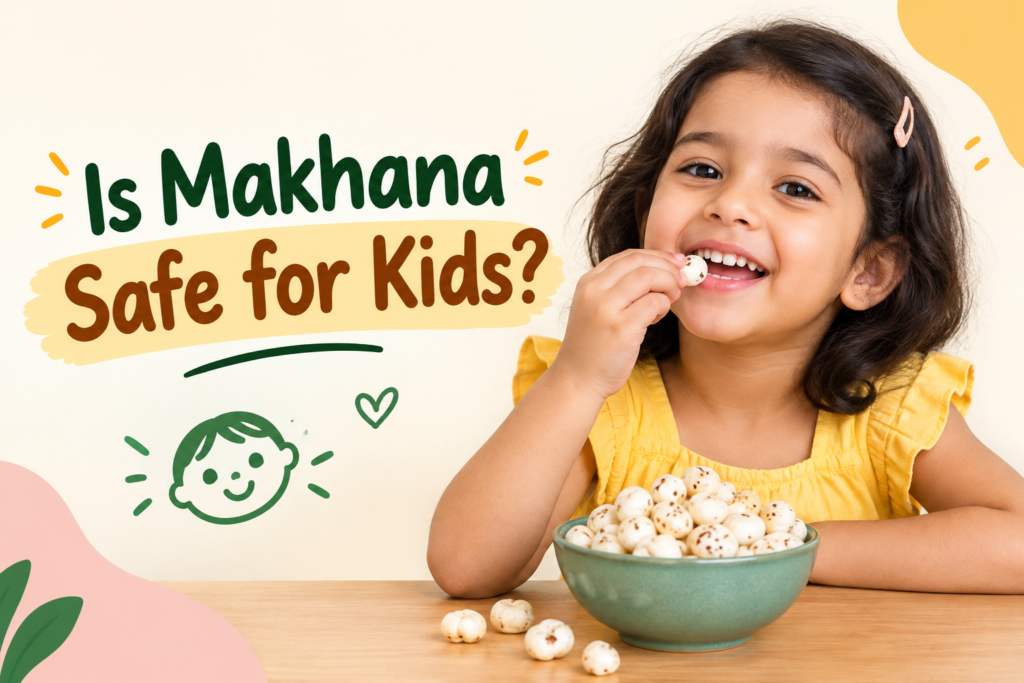
Quick answer: Yes, makhana is good for kids. It is a natural, easily digestible snack with no trans fats, no artificial preservatives, and a good amount of calcium, protein, and fiber. Children above 2 years can safely eat plain roasted makhana in small portions (10–15g per serving). For toddlers under 2, soft-cooked makhana in khichdi or kheer is safer than hard roasted pieces. Always check with your pediatrician before introducing new foods.
Most parents are constantly looking for snacks that are actually good for their kids — not just “better than chips.” Makhana checks that box in a way that most packaged snacks cannot. No deep frying, no artificial color, no mystery ingredients. Just puffed lotus seeds that have been part of Indian children’s diets for generations, especially in Bihar and eastern UP where makhana is a daily food.
Is Makhana Safe for Kids?
Yes — makhana is safe for children when served in age-appropriate portions and preparation. It is naturally gluten-free, low in fat, and free of common allergens, making it suitable for most children including those with gluten intolerance or dairy sensitivity.
Key safety points:
- Above 2 years: Plain roasted makhana in small pieces is safe for most toddlers
- Under 2 years: Serve soft-cooked in kheer, khichdi, or porridge — hard roasted pieces are a choking risk for very young children
- Above 5 years: Can eat roasted makhana normally, including lightly flavored varieties
- Allergies: Makhana itself is not a common allergen, but flavored varieties may contain spices that some children are sensitive to — always start with plain
Nutritional Benefits of Makhana for Children
This is why makhana earns its place as a children’s snack — not because it’s trendy, but because the nutritional profile genuinely supports growing bodies.
| Nutrient | Per 30g Serving | Benefit for Children |
|---|---|---|
| Calcium | ~60mg | Bone and teeth development |
| Protein | ~3.5g | Muscle growth and development |
| Fiber | ~3g | Supports healthy digestion |
| Magnesium | ~40mg | Nerve function and sleep quality |
| Phosphorus | ~200mg | Bone strength alongside calcium |
| Calories | ~105 kcal | Light energy — doesn’t spike blood sugar |
| Fat | ~0.1g | Virtually fat-free — no trans fats |
| Glycemic Index | ~25 | Low — no sugar crash after eating |
Compared to a 30g serving of potato chips (~160 kcal, 10g fat, artificial flavoring), makhana delivers more calcium, more protein, and more fiber — with less than 1% of the fat content.
Makhana Benefits for Kids — Detailed
1. Supports Bone Development
Makhana contains calcium and phosphorus — two minerals essential for bone and teeth development in growing children. While it is not a replacement for dairy, it is a useful supplementary source of calcium, particularly for children who are selective eaters or lactose sensitive.
2. Easy to Digest
Unlike many high-fiber snacks that can cause bloating or discomfort in children, makhana is light and easy on small digestive systems. It is a common recommendation in traditional Indian home remedies for children with upset stomachs or loose motions — plain roasted makhana with rock salt is often given as a settling snack.
3. Keeps Children Full Without Sugar Spikes
Makhana’s low glycemic index (~25) means it releases energy slowly — no sudden blood sugar spike followed by a cranky crash, which is what happens after most packaged sugary snacks. This makes it a good after-school or between-meal snack.
4. Zero Artificial Additives in Plain Form
Plain roasted makhana — the kind you make at home or buy from clean-label brands — has one ingredient: makhana. No artificial color, no preservatives, no flavor enhancers. For parents trying to reduce their children’s exposure to processed food additives, this is genuinely useful.
5. Good for Concentration and Brain Function
Makhana contains thiamine (Vitamin B1), which supports the nervous system and cognitive function. While no single food is a “brain food,” makhana’s clean nutritional profile makes it a better snack choice during study time than sugary alternatives.
6. Supports Healthy Weight in Children
Children who snack on makhana instead of fried snacks naturally consume fewer calories and less unhealthy fat — which matters for maintaining a healthy weight without restrictive eating. The fiber and protein keep them full without overeating.
At What Age Can Babies and Children Eat Makhana?
| Age | Form | Serving |
|---|---|---|
| 6–9 months | Makhana powder mixed into porridge or puree | 1–2 tsp mixed in |
| 9–12 months | Soft-cooked in khichdi or kheer | Small amounts |
| 12–24 months | Soft-cooked or lightly crushed — not whole hard pieces | 1–2 tbsp |
| 2–5 years | Small plain roasted pieces (supervise while eating) | 10–15g per serving |
| 5 years+ | Normal roasted makhana, plain or lightly flavored | 20–30g per serving |
Important: Always supervise young children while eating makhana. Whole roasted pieces can be a choking hazard for children under 2 — always cook until soft or crush lightly for this age group.
How Much Makhana Should Kids Eat Per Day?
| Age Group | Recommended Serving | Frequency |
|---|---|---|
| 1–2 years (cooked) | 1–2 tbsp soft-cooked | Once daily as part of a meal |
| 2–5 years | 10–15g (small handful) | Once daily as a snack |
| 5–12 years | 20–30g | Once or twice daily as a snack |
| Teenagers | 30–40g | As needed between meals |
Do not give makhana as a meal replacement for children — it works best as a between-meal snack alongside a balanced diet of dal, sabzi, roti, rice, fruit, and dairy.
5 Easy Makhana Recipes for Kids
1. Makhana Kheer (Best for Toddlers 12 months+)
The most popular traditional preparation — gentle, nutritious, and loved by most children.
Ingredients: 1 cup makhana, 2 cups full-fat milk, 2 tsp jaggery or sugar, a pinch of cardamom
Method: Dry roast makhana in a pan on low heat for 3 minutes until crispy. Cool and crush lightly. Boil milk, add crushed makhana, simmer 10 minutes until thick. Add jaggery and cardamom. Serve warm.
Why kids love it: Sweet, creamy, naturally flavored — tastes like a dessert but is genuinely nutritious.
2. Plain Roasted Makhana (Best for 2 years+)
The simplest preparation — takes 5 minutes.
Method: Heat a pan on low flame. Add makhana (no oil). Roast for 3–4 minutes, stirring continuously, until they become crispy and slightly golden. Add a tiny pinch of rock salt. Cool before serving.
Why kids love it: Light, crunchy, mildly salty — a satisfying texture that holds their attention.
3. Makhana Porridge (Best for 6–12 months)
Good introduction for babies starting solids.
Method: Grind 2 tbsp makhana into fine powder. Mix with warm water or breastmilk/formula to thin porridge consistency. Can be mixed with banana puree or apple puree.
4. Makhana Chaat (Best for 5 years+)
A fun, tangy snack for older children who like flavor.
Ingredients: 1 cup roasted makhana, 1 small boiled potato (cubed), 1 tsp chaat masala, a squeeze of lemon, fresh coriander
Method: Toss all ingredients together and serve immediately. Quick, filling, and far better than packaged chaat snacks.
5. Makhana Mixed with Dry Fruits (Best for School Lunch Box)
A no-cook, portable snack mix that works perfectly in school tiffin boxes.
Method: Mix roasted plain makhana with raisins, a few cashews, and some pumpkin seeds in a small container. No preparation needed — assemble in 2 minutes.
Why it works for school: Light, non-messy, doesn’t need refrigeration, and keeps children full through the afternoon.
Makhana for Kids vs Other Common Children’s Snacks
| Snack | Calories (30g) | Fat | Artificial Additives | Fiber |
|---|---|---|---|---|
| Plain roasted makhana | 105 kcal | 0.1g | None | 3g |
| Potato chips | 160 kcal | 10g | Often | 1g |
| Packaged biscuits | 140 kcal | 6g | Often | 0.5g |
| Puffed rice (murmura) | 110 kcal | 0.5g | None | 0.3g |
| Roasted peanuts | 170 kcal | 14g | None | 2g |
Makhana is the only snack in this comparison with virtually zero fat, zero artificial additives, and a meaningful fiber content — making it the cleanest nutritional option for children’s snacking.
Which Makhana to Choose for Your Kids
For children, always choose:
- Plain roasted makhana (single ingredient) for children under 5
- Lightly flavored (minimal spices, no artificial color) for children above 5
- Avoid: heavily spiced, very salty, or oil-fried varieties for young children
Choosing a makhana brand that discloses sourcing, uses air-roasting rather than oil frying, and has a clean ingredient list matters more for children’s snacks than for adult snacking — because children eat the same snacks repeatedly and their bodies are more sensitive to additives.
Grainhill’s makhana is air-roasted with zero preservatives and a 2–3 ingredient list — suitable for children above 5 years who can eat lightly spiced snacks. For children under 2, plain home-roasted makhana or makhana kheer is always the safest preparation.
Frequently Asked Questions
Can babies eat makhana? Babies above 6 months can have makhana powder mixed into porridge. From 9–12 months, soft-cooked makhana in khichdi or kheer is safe. Hard roasted pieces should not be given to babies under 2 due to choking risk.
Is makhana good for kids’ brain development? Makhana contains thiamine (Vitamin B1) which supports the nervous system, along with magnesium which is associated with cognitive function. While no single food guarantees brain development, makhana’s clean nutritional profile makes it a better snack choice than most packaged alternatives.
Can makhana cause constipation in children? Makhana itself is not known to cause constipation — it contains dietary fiber that supports healthy digestion. However, as with any new food, introduce it gradually and ensure your child drinks enough water alongside it.
Is makhana better than chips for kids? Yes — significantly better. Plain roasted makhana has less than 1% fat compared to 30–35% fat in fried chips, zero artificial flavoring, and more fiber and calcium. It is one of the cleanest snack-to-snack swaps available.
Can makhana be given during exams or study time? Yes — makhana’s low glycemic index means it provides sustained energy without the blood sugar spike and crash that sugary snacks cause. It is a good study-time snack for school-age children.
How to store makhana for kids’ tiffin boxes? Store roasted makhana in an airtight container at room temperature. It stays crispy for 5–7 days without refrigeration. Do not mix with wet ingredients (curd, chutney) until serving time or it will become soggy.
Is flavored makhana safe for kids? Lightly flavored makhana (rock salt, mild spices) is generally safe for children above 5. Avoid heavily spiced, very salty, or artificially colored varieties for younger children. Always check the ingredient list before giving flavored makhana to children under 5.
Bottom Line
Makhana is one of the best snacks you can give your children — naturally nutritious, virtually fat-free, clean-label in its plain form, and genuinely enjoyed by most kids when prepared well. The makhana kheer is the best starting point for toddlers; plain roasted makhana is the easiest daily snack for school-age children.
The key things to remember:
- Under 2 years → always soft-cooked, never hard roasted pieces
- Choose plain or lightly flavored over heavily spiced for children under 5
- Start with small portions and watch for any sensitivity
- Plain makhana from a clean-label brand is always safer than packaged flavored snacks with long ingredient lists
👉 Shop Grainhill Makhana — Air-Roasted, Zero Preservatives →
Also read:
- Makhana During Pregnancy — Benefits, Safety & How Much to Eat
- Makhana for Weight Loss — Calories, Portion Size & How It Works
- Can Diabetics Eat Makhana? The Complete Guide
Grainhill is a premium D2C makhana brand sourcing GI-tagged, 6-Sutta grade fox nuts directly from Mithila farms in Bihar. FSSAI certified. No preservatives. Packed fresh and delivered pan-India.
This article is for general informational purposes and is not a substitute for personalized pediatric advice. Always consult your child’s pediatrician before introducing new foods, especially for children under 2 years.