
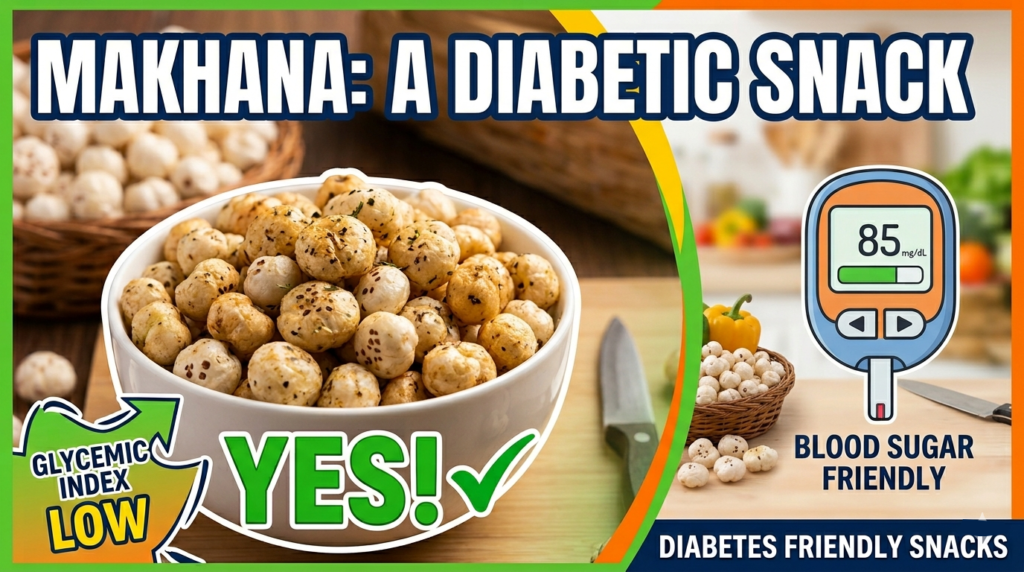
Published by Grainhill | Healthy Snacking | 7 min read
If you or someone you love has diabetes, snacking becomes one of the most stressful parts of the day. Most packaged snacks — chips, biscuits, namkeen, even many “healthy” options — cause blood sugar to spike dangerously. Finding something crunchy, satisfying, and genuinely safe for diabetics feels almost impossible.
Makhana might be the answer you’ve been looking for.
In this complete guide, we’ll cover everything a diabetic needs to know about makhana — the glycaemic index, the science behind blood sugar response, safe serving sizes, and exactly how to eat it without worry.
Short answer: Yes, diabetics can eat makhana — and it’s actually one of the best snack choices available.
But let’s look at the full picture.
What Makes a Snack Safe for Diabetics?
Before we dive into makhana specifically, it’s worth understanding what diabetics actually need from a snack.
A safe diabetic snack should:
- Have a low glycaemic index (GI) — meaning it raises blood sugar slowly rather than causing a spike
- Be high in protein and fibre — which slow glucose absorption
- Be low in refined carbohydrates — white flour, sugar, and refined starches cause rapid blood sugar rises
- Be low in saturated fat and sodium — diabetes increases cardiovascular risk, so heart-healthy choices matter
- Have genuine nutritional value — not just empty calories
Now let’s see how makhana scores on every one of these criteria.
Makhana’s Glycaemic Index — The Key Number
The glycaemic index (GI) measures how quickly a food raises blood sugar on a scale of 0 to 100. Foods with a GI above 70 are considered high and dangerous for diabetics. Foods below 55 are considered low and safe.
Makhana has a glycaemic index of approximately 31.
That puts makhana firmly in the low-GI category — comparable to lentils, chickpeas, and most vegetables. For context, here’s how common Indian snacks compare:
| Snack | Glycaemic Index | Safe for Diabetics? |
|---|---|---|
| Makhana | ~31 | ✅ Yes — Low GI |
| Roasted Chana | ~28 | ✅ Yes — Low GI |
| White Rice | ~72 | ❌ High GI |
| Potato Chips | ~70+ | ❌ High GI |
| White Bread | ~75 | ❌ Very High GI |
| Biscuits (Marie) | ~70 | ❌ High GI |
| Namkeen / Bhujia | ~65 | ⚠️ Medium-High |
| Popcorn (plain) | ~65 | ⚠️ Medium |
Makhana’s low GI means it releases glucose slowly and steadily into the bloodstream — preventing the sharp spikes and crashes that are dangerous for people with Type 1 or Type 2 diabetes.
The Full Nutrition Profile — Why Makhana Works for Diabetics
Beyond the GI score, makhana’s complete nutritional profile makes it particularly well-suited for diabetic management.
Per 100g of makhana:
- Calories: ~347 kcal (moderate — not empty calories)
- Protein: 9.7g — helps slow glucose absorption significantly
- Total Fat: 0.1g — extremely low, heart-healthy
- Carbohydrates: 76.9g — but complex carbs with low GI, not simple sugars
- Fibre: 0.5–1g
- Calcium: 60mg — important as diabetics often have lower bone density
- Magnesium: 67mg — critical for insulin sensitivity
- Potassium: supports healthy blood pressure, a key concern for diabetics
- Sodium: naturally very low (~10mg per 100g before flavouring)
The magnesium content deserves special mention. Multiple clinical studies have found that magnesium deficiency is linked to insulin resistance and poor blood sugar control. Makhana is a meaningful source of dietary magnesium — making it genuinely therapeutic, not just safe, for diabetics.
What the Research Says
While makhana-specific clinical trials in diabetics are limited, the research on its key properties is clear:
Low GI foods consistently reduce HbA1c. A review published in the American Journal of Clinical Nutrition found that long-term consumption of low-GI foods significantly reduces HbA1c levels — the gold standard measure of long-term blood sugar control. With a GI of ~31, makhana qualifies as a strong low-GI food.
Magnesium improves insulin sensitivity. Multiple large studies have shown that dietary magnesium intake is inversely associated with Type 2 diabetes risk — the more magnesium in your diet, the better your body responds to insulin. Makhana contributes meaningfully to daily magnesium intake.
High protein snacks reduce post-meal blood sugar spikes. Research consistently shows that protein-rich snacks eaten between meals reduce glucose variability throughout the day. At 9.7g protein per 100g, makhana is one of the highest-protein snacks available in the Indian market.
Kaempferol — makhana’s antioxidant — has anti-diabetic properties. Makhana contains kaempferol, a flavonoid antioxidant that has shown anti-diabetic effects in laboratory studies — including improved insulin secretion and reduced pancreatic cell damage. While more human trials are needed, this is a promising finding.
How Much Makhana Can a Diabetic Eat Per Day?
This is the most important practical question — and the honest answer is: 30–40g per sitting, 1–2 times per day is a safe and beneficial amount for most diabetics.
That’s approximately one small bowl or half a standard pack of Grainhill makhana (80g).
Why this limit?
Even low-GI foods contain carbohydrates that affect blood sugar if eaten in very large quantities. Makhana has approximately 23g of carbohydrates per 30g serving. For most diabetics managing carbohydrate intake, staying within 30–40g of makhana per snacking session keeps the blood sugar impact minimal.
Best time to eat makhana for diabetics:
- Mid-morning (10–11am) — between breakfast and lunch to prevent the pre-lunch blood sugar dip
- Evening (4–6pm) — the most common time for dangerous blood sugar drops and unhealthy snack cravings
- Post-exercise — the protein helps muscle recovery while the low GI prevents glucose spikes
Avoid eating makhana:
- Immediately before bed in large quantities
- As a replacement for a proper meal — it’s a snack, not a meal substitute
- In very large quantities (100g+) in one sitting without monitoring blood sugar response
Flavoured Makhana and Diabetes — What to Watch
Plain roasted makhana is the most diabetes-friendly option. But flavoured makhana — including Grainhill’s range — can also be suitable, with a few things to keep in mind.
What to look for on the label:
✅ Natural spices — safe and beneficial (turmeric, cumin, coriander all have anti-inflammatory properties) ✅ Sea salt — fine in moderate quantities ✅ No added sugar — check the ingredients for hidden sugars like maltodextrin, dextrose, or corn syrup ✅ No MSG — artificial flavour enhancers can increase sodium load
Grainhill makhana uses only natural spices and sea salt — no added sugar, no artificial flavours, no preservatives. All three flavors (Peri Peri, Tangy Tomato, Achari Masala) are made with clean ingredients that are compatible with diabetic dietary requirements.
The total sodium per serving increases slightly with flavoured varieties — diabetics with hypertension (a very common comorbidity) should be mindful of total daily sodium intake, but a 30–40g serving of flavoured makhana is well within safe limits.
Makhana vs Other Common Diabetic Snacks in India
Many diabetics default to a handful of nuts or plain biscuits as their go-to snack. Here’s how makhana compares:
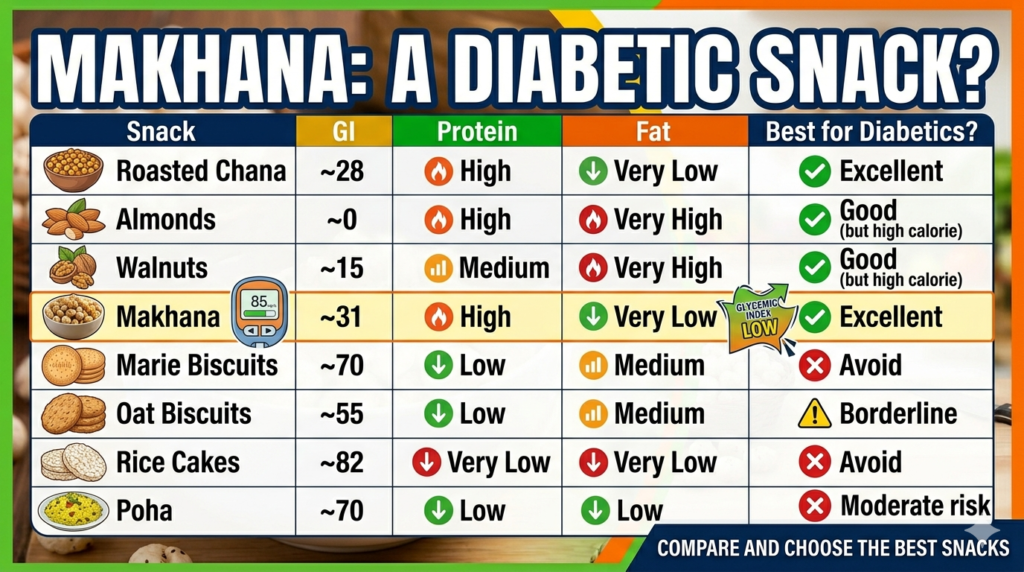
Makhana stands out as one of the very few snacks that is simultaneously low GI, high protein, low fat, low sodium, and genuinely tasty — a combination that’s very hard to find in the Indian snack market.
3 Easy Makhana Snack Ideas for Diabetics
1. Spiced Roasted Makhana Bowl Simply open a pack of Grainhill Achari Masala makhana, portion 30–40g into a small bowl. Eat slowly, chew well — this helps slow digestion and further reduces the glycaemic impact.
2. Makhana with Curd (Raita Style) Mix 30g of plain roasted makhana into 100g of low-fat curd with a pinch of cumin and black salt. The protein and probiotics in curd combined with makhana’s low GI make this an excellent diabetic snack — filling, nutritious, and blood sugar friendly.
3. Makhana Trail Mix Combine 20g makhana with 10g almonds and 10g pumpkin seeds. This combination gives you low GI carbs, healthy fats, protein, and zinc — a nutritionally complete diabetic snack that keeps you satisfied for 3–4 hours.
Important Disclaimer
This article provides general nutritional information and is not a substitute for personalised medical advice. Every diabetic’s blood sugar response is individual — factors like medication, insulin sensitivity, meal timing, and activity level all affect how your body responds to any food.
We strongly recommend:
- Monitoring your blood sugar 1–2 hours after eating makhana for the first few times to understand your personal response
- Discussing any significant dietary changes with your doctor or registered dietitian
- Not using makhana as a replacement for prescribed medication or insulin
That said, for the vast majority of people with Type 2 diabetes, makhana is a genuinely excellent snack choice — one that most doctors and dietitians would actively recommend as part of a balanced diabetic diet.
The Bottom Line
Makhana is one of the safest, most nutritious snacks available for diabetics in India. Its low glycaemic index of ~31, high protein content, meaningful magnesium levels, and completely natural ingredient list make it a genuinely therapeutic food — not just a safe snack.
Compared to chips, biscuits, namkeen, and most other packaged snacks that diabetics are forced to avoid, makhana is a revelation. You get the crunch, the flavour, and the satisfaction — without the blood sugar spike.
30–40g per sitting, once or twice a day, is the sweet spot for most diabetics. Listen to your body, monitor your response, and consult your doctor for personalised guidance.
👉 Shop Grainhill Makhana — Natural Ingredients, No Added Sugar, Free Shipping →
Grainhill is a premium makhana brand sourcing directly from the farms of Mithila, Bihar. All our makhanas are air-roasted with natural spices — no artificial colours, no preservatives, no added sugar. FSSAI certified.