
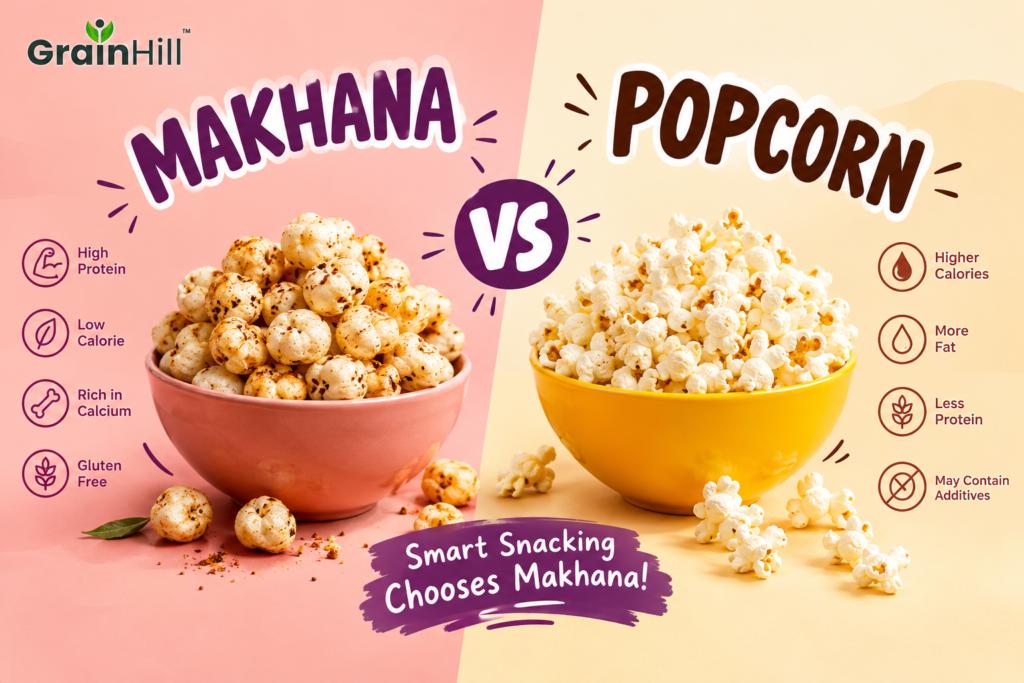
Makhana vs Popcorn: Which Is Actually Healthier? (2026 Data Comparison)
Quick answer: Makhana wins on fat (0.1g vs 4.5g per 100g), calcium (60mg vs 3mg), glycemic index (50 vs 72), and mineral content. Plain air-popped popcorn wins on fiber per gram. Flavored and buttered popcorn — the kind most Indians actually eat — loses on every single metric. For weight loss, diabetes management, and clean snacking, makhana is the stronger choice. For volume eating at very low calories, plain air-popped popcorn has a narrow edge.
Both makhana and popcorn are light, crunchy, satisfying snacks. Both have a “healthy snack” reputation. Both are popular in Indian health-conscious households. But the actual nutritional difference between them is significant — and most comparison articles don’t tell you the full story. This one does, including where popcorn genuinely wins.
Makhana vs Popcorn — Complete Nutrition Comparison Per 100g
Sources: ICMR Indian Food Composition Tables 2017 (makhana) / USDA FoodData Central (popcorn)
| Nutrient | Makhana (plain roasted) | Popcorn (air-popped) | Flavored/Buttered Popcorn | Winner |
|---|---|---|---|---|
| Calories | 347 kcal | 387 kcal | 480–550 kcal | 🏆 Makhana |
| Protein | 9.7g | 3–12g* | 2–4g | 🏆 Makhana |
| Total Fat | 0.1g | 4.5g | 20–30g | 🏆 Makhana |
| Saturated Fat | 0g | 0.5g | 8–12g | 🏆 Makhana |
| Dietary Fiber | 14.5g | 14–15g | 6–8g | Draw (plain) |
| Carbohydrates | 76.9g | 74–77g | 60–70g | Draw |
| Calcium | 60mg | 3mg | 2–5mg | 🏆 Makhana |
| Magnesium | 210mg | 90mg | 30–50mg | 🏆 Makhana |
| Phosphorus | 222mg | 260mg | 80–100mg | Popcorn (plain) |
| Potassium | 500mg | 270mg | 100–150mg | 🏆 Makhana |
| Iron | 1.4mg | 0.9mg | 0.3–0.5mg | 🏆 Makhana |
| Sodium | 5mg | 2mg | 400–800mg | Both (plain) |
| Glycemic Index | ~50 | ~65–72 | ~70–80 | 🏆 Makhana |
| Cholesterol | 0mg | 0mg | 0–5mg | Draw |
| Gluten Free | Yes | Yes | Often No | Draw |
Protein in popcorn varies widely by source — USDA values range from 3g to 12g per 100g depending on preparation.
Makhana vs Popcorn Per 30g Serving — What You Actually Eat
Per 100g comparisons are useful for the data, but nobody eats exactly 100g. Here’s what a realistic serving looks like:
| Nutrient | Makhana 30g | Plain Popcorn 30g | Masala Microwave Popcorn 30g |
|---|---|---|---|
| Calories | 104 kcal | 116 kcal | 150–165 kcal |
| Protein | 2.9g | 1–3.6g | 1–2g |
| Fat | 0.03g | 1.3g | 6–9g |
| Fiber | 4.4g | 4.2–4.5g | 2–3g |
| Calcium | 18mg | 1mg | 1mg |
| Magnesium | 63mg | 27mg | 10–15mg |
| Glycemic Index | ~50 | ~65–72 | ~70–80 |
| Sodium | 1.5mg | 1mg | 200–350mg |
The key takeaway per serving: Makhana and plain popcorn are similar in calories per 30g (104 vs 116). But makhana has 18x more calcium, 2.3x more magnesium, significantly more protein, and a 20-point lower glycemic index. Plain air-popped popcorn has marginally comparable fiber. Packaged masala popcorn loses on every metric.
Where Makhana Wins — And Why It Matters
1. Fat Content — Not Even Close
Makhana has 0.1g fat per 100g — one of the lowest fat contents of any snack food in existence. Plain air-popped popcorn has 4.5g fat per 100g. Buttered or flavored popcorn jumps to 20–30g fat per 100g.
This matters most for people managing weight or cardiovascular health. At a 30g serving, makhana delivers essentially zero fat contribution to your daily total, while even plain popcorn adds 1.3g and flavored popcorn adds 6–9g.
2. Glycemic Index — Critical for Diabetics and Weight Management
Makhana has a GI of approximately 50 — classified as low to medium. Plain popcorn has a GI of approximately 65–72 — classified as medium to high.
The practical difference: after eating makhana, your blood sugar rises slowly and steadily. After eating popcorn, it rises faster and higher — triggering a quicker hunger signal. This is why makhana keeps you feeling full longer despite similar calories.
For diabetics specifically, this difference is significant. For a complete guide: Can Diabetics Eat Makhana?
3. Calcium — 20x More Per Serving
Makhana has 60mg calcium per 100g. Plain popcorn has approximately 3mg per 100g. That’s 20x more calcium in makhana — meaningful for bone health, pregnancy nutrition, and children’s diets.
4. Magnesium — 2.3x More Per Serving
Makhana has 210mg magnesium per 100g versus approximately 90mg in plain popcorn. Magnesium deficiency is extremely common in India — makhana is one of the better snack-food sources of this mineral.
5. Mineral Profile Overall
Makhana is richer in potassium (500mg vs 270mg per 100g), iron (1.4mg vs 0.9mg), and calcium — making it a more nutritionally complete snack beyond just calories and macros.
Where Popcorn Wins — Being Honest About It
1. Fiber Per Gram (Plain Air-Popped Only)
Plain air-popped popcorn has approximately 14.5–15g fiber per 100g — comparable to makhana’s 14.5g. However, because popcorn is less dense, you get more volume per gram — meaning you can eat a larger physical quantity of popcorn for the same fiber contribution. If you’re a volume eater who needs to feel like you’re eating a lot, popcorn has a psychological edge.
2. Lower Calories at High Volume
1 cup of plain air-popped popcorn is approximately 31 calories — because it’s mostly air. You can eat 3–4 cups for under 120 calories. That same calorie budget in makhana buys you about 1 cup (30g). If volume matters to you more than nutrition density, plain popcorn wins.
3. Whole Grain Status
Popcorn is a whole grain — which means it contains the bran, germ, and endosperm of corn. Makhana is a seed, not a grain. From a whole grain intake perspective, popcorn contributes to that dietary category while makhana does not.
The Real-World Problem With Popcorn
Here’s what most makhana vs popcorn comparisons miss: almost nobody eats plain air-popped popcorn in India.
The popcorn most Indians eat is one of these:
| Type | Calories per 30g | Fat per 30g | Sodium per 30g |
|---|---|---|---|
| Haldiram’s Magic Makhana (popcorn) | 150 kcal | 7g | 220mg |
| Microwave butter popcorn | 155–165 kcal | 8–10g | 300–400mg |
| Cinema popcorn (large, buttered) | 180–220 kcal | 12–15g | 400–600mg |
| Packaged masala popcorn | 140–160 kcal | 6–9g | 250–350mg |
| Plain roasted makhana (Grainhill) | 104 kcal | 0.5g | 150–200mg |
Every packaged popcorn variant in India adds significant oil, butter, or artificial flavoring — which erases popcorn’s calorie advantage completely. When you compare real-world popcorn consumption against clean-label roasted makhana, makhana wins decisively.
Makhana vs Popcorn for Specific Goals
For Weight Loss
Winner: Makhana Lower GI prevents the hunger-spike cycle. Higher protein (2.9g vs 1–3g per 30g) supports satiety. Virtually zero fat. The combination of low GI + high fiber + meaningful protein makes makhana more effective at reducing total calorie intake through the day than popcorn.
For a complete guide: Makhana for Weight Loss
For Diabetics
Winner: Makhana — significantly GI of ~50 vs ~65–72 for popcorn. The lower glycemic response means less blood sugar disruption per serving — critical for people managing diabetes or prediabetes.
For Heart Health
Winner: Makhana Zero saturated fat, zero cholesterol, higher potassium (blood pressure support), higher magnesium (cardiac function).
For Bone Health
Winner: Makhana 20x more calcium and significantly more phosphorus and magnesium — all three essential for bone density.
For Pregnancy
Winner: Makhana Higher calcium, iron, and magnesium — three nutrients specifically recommended during pregnancy. For a complete guide: Makhana During Pregnancy
For Kids
Winner: Makhana Higher calcium for bone development, no artificial additives in clean-label form, lower GI for sustained energy without sugar crashes. For a complete guide: Makhana for Kids
For Volume Eating (Strict Calorie Deficit)
Winner: Plain Air-Popped Popcorn (narrow) If you’re on a strict calorie deficit and need volume to feel full, 3–4 cups of plain air-popped popcorn at ~120 calories is more physically satisfying than 30g of makhana at 104 calories. This is the one scenario where plain popcorn has a genuine edge.
For Office Snacking
Winner: Makhana Less messy, no hulls that get stuck in teeth, doesn’t leave butter on fingers or keyboard, airtight container keeps it fresh for 5–7 days, and the lower GI means no energy crash at 3pm.
Makhana vs Popcorn — Final Scorecard
| Category | Makhana | Plain Popcorn | Packaged Popcorn |
|---|---|---|---|
| Calories per 100g | ✅ Lower | ❌ Higher | ❌❌ Much higher |
| Fat | ✅✅ Virtually zero | ⚠️ Low | ❌❌ Very high |
| Protein | ✅ Higher | ❌ Lower | ❌❌ Lowest |
| Fiber | ✅ High | ✅ Comparable | ❌ Lower |
| Calcium | ✅✅ 20x more | ❌ Very low | ❌ Very low |
| Glycemic Index | ✅ Low (~50) | ⚠️ Medium (~65–72) | ❌ High |
| Sodium (plain) | ✅ Very low | ✅ Very low | ❌❌ Very high |
| Preservatives | ✅ None (clean label) | ✅ None (plain) | ❌ Often present |
| Real-world availability | ✅ Consistent | ⚠️ Mostly packaged versions | ❌ Heavily processed |
| Overall verdict | 🏆 Winner | Decent (plain only) | ❌ Not recommended |
Frequently Asked Questions
Is makhana healthier than popcorn? Yes — for most health goals, makhana is healthier than popcorn. It has significantly less fat (0.1g vs 4.5g per 100g), more calcium (60mg vs 3mg), a lower glycemic index (~50 vs ~65–72), and more meaningful mineral content. Plain air-popped popcorn is comparable in fiber and volume, but most packaged popcorn in India is not plain or air-popped.
Which has fewer calories — makhana or popcorn? Per 100g, makhana has 347 calories and plain air-popped popcorn has 387 calories — makhana is lower. Per 30g serving both are similar: ~104 kcal (makhana) vs ~116 kcal (plain popcorn). The difference becomes dramatic with packaged popcorn, which can reach 150–165 kcal per 30g due to added oil and flavoring.
Is makhana better than popcorn for weight loss? Yes — primarily because of the lower glycemic index and higher protein content. Makhana’s GI of ~50 prevents the blood sugar spike-and-crash cycle that triggers hunger sooner after eating. Per serving, makhana also provides more protein (2.9g vs 1–3g), which supports longer satiety.
Does makhana have more protein than popcorn? Yes — makhana has 9.7g protein per 100g. Plain air-popped popcorn has 3–4g protein per 100g. Per 30g serving, makhana provides approximately 2.9g protein versus 1–1.3g for plain popcorn — making makhana meaningfully higher in protein.
Can diabetics eat makhana instead of popcorn? Yes — makhana is the better choice for diabetics. Its glycemic index of ~50 is significantly lower than popcorn’s ~65–72, meaning it causes less blood sugar disruption per serving. Always consult your doctor about portion sizes.
Which is better for kids — makhana or popcorn? Makhana is generally the better choice for children. Higher calcium supports bone development, the lower GI prevents energy crashes, and clean-label makhana has no artificial additives. Popcorn hulls can also be a choking risk for young children.
Is flavored makhana healthier than flavored popcorn? Yes — lightly flavored clean-label makhana (like Grainhill’s Peri Peri or Tangy Tomato) adds minimal oil and natural spices, keeping the total fat well under 1g per 30g serving. Flavored popcorn typically uses significant butter, artificial flavoring, and salt — reaching 6–12g fat per 30g serving.
Bottom Line
For virtually every health goal — weight loss, diabetes management, heart health, bone strength, pregnancy, and clean everyday snacking — roasted makhana is the healthier choice over popcorn.
The one honest exception: if you need maximum food volume at minimum calories (strict calorie deficit dieting), plain air-popped popcorn’s low density gives you more physical food for the same calories. But this advantage disappears entirely with any packaged or flavored popcorn — which is what most Indians actually eat.
For genuinely guilt free, clean-label makhana that’s air-roasted with zero preservatives and sourced from GI-tagged Mithila farms in Bihar:
👉 Shop Grainhill Makhana — Peri Peri, Tangy Tomato & Achari Masala →
Also read:
- Makhana vs Chips: Which Is Actually the Healthier Snack?
- Makhana for Weight Loss — Calories, Portion Size & How It Works
- Makhana Nutrition Facts — Complete Chart Per 100g
- Guilt Free Snacks India — 10 Best Options Ranked
Grainhill is a premium D2C makhana brand sourcing GI-tagged, 6-Sutta grade fox nuts directly from Mithila farms in Bihar. FSSAI certified. Zero preservatives. Air-roasted in small batches. Delivered fresh pan-India.
Nutrition data sourced from ICMR Indian Food Composition Tables 2017 and USDA FoodData Central. Values are averages for plain preparations — flavored variants vary. This article is for general informational purposes and is not a substitute for medical or dietary advice.