
Quick answers
- Is makhana a dry fruit? In everyday Indian use, yes. It is sold and eaten with dry fruits. Botanically, it is the popped seed of a water lily, not a tree nut.
- How many calories are in 50 g of makhana? About 170 to 175 kcal for plain raw makhana. Flavoured and oil-roasted makhana can be higher.
- How many calories are in fox nuts? About 347 kcal per 100 g for plain raw fox nuts, according to commonly cited Indian food composition data.
- What are the benefits? Makhana is naturally low in fat, gluten free and light on the stomach, so it makes a handy snack.
- How do I pick from the many makhana brands in India? Compare size, ingredients, freshness and price per 100 g. We explain how below.
Is makhana a dry fruit?
Makhana, also called fox nut, phool makhana or lotus seed, comes from a plant called Euryale ferox, a type of water lily that grows in ponds and wetlands. The seeds are collected, dried and then popped into the light, white puffs you know as makhana.
So what is it, exactly?
- In the kitchen and the market, it is a dry fruit. You will find it on the same shelf as almonds, cashews and raisins, and Indian homes use it the same way: as a snack, in sweets and in fasting food.
- Botanically, it is a seed. It is not a tree nut and not a dried fruit.
If you or someone you buy for has a nut allergy, do not assume makhana is safe just because it is not a tree nut. Read the label for cross-contact warnings and ask your doctor.
Calories in makhana and fox nuts
Plain raw makhana is a light, low-fat food. Commonly cited values for raw makhana, based on Indian food composition data, are:
| Amount | Approx. calories | Approx. protein |
|---|---|---|
| 28 g (a small handful) | about 95-100 kcal | about 2.7 g |
| 50 g | about 173 kcal | about 4.9 g |
| 100 g | about 347 kcal | about 9.7 g |
Per 100 g, plain raw makhana is also listed with about 77 g of carbohydrate and only about 0.1 g of fat.
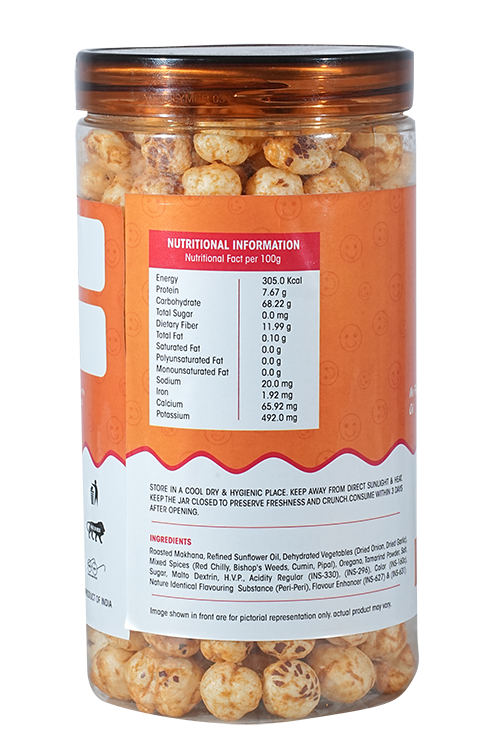
Important: These figures are for plain makhana. Sources differ a little, and the numbers change once makhana is roasted in oil or ghee and seasoned. A flavoured pack can have more calories, more fat and more sodium than plain makhana, so always check the nutrition table on the pack for the exact figure.
Peri Peri Grainhill Makhana:
How many calories are in 50 g of makhana?
For plain raw makhana, 50 g gives roughly 173 kcal, and 50 g is about two generous handfuls. A roasted, seasoned snack may differ. If you are counting calories, weigh your portion on a kitchen scale, check the label and adjust.
Makhana dry fruit benefits
Here is why many people like makhana as a snack. These are general nutrition points, not medical claims:
- Naturally low in fat. Plain makhana has very little fat, so most of the calories come from carbohydrate.
- Gluten free. Makhana is naturally gluten free. If you have coeliac disease, check the label for how the pack was processed.
- Light and filling. The puffs are airy, so a bowl feels satisfying for a modest number of calories.
- A source of plant protein and fibre. Plain makhana has around 9.7 g of protein per 100 g.
- Some minerals. Plain makhana is listed with small amounts of calcium, magnesium and potassium.
- Easy to eat. It is vegetarian, needs no preparation and travels well, so it suits a desk, a tiffin box or an evening with tea.
Makhana works best as part of a balanced diet. It is not a cure for anything. If you have diabetes, kidney problems or any other health condition, ask your doctor or dietitian how much makhana suits you.
Makhana vs other dry fruits
| Snack (28 g, plain) | What to know |
|---|---|
| Makhana | Very low in fat, light and crunchy |
| Almonds | Rich in fat, so higher in calories per handful |
| Cashews | Creamy and higher in calories per handful |
| Raisins | Naturally sweet, mostly sugar |
The point is not that one is better. Makhana is a lighter option when you want a larger handful for fewer calories, and you can enjoy dry fruits and makhana together.
Simple ways to eat makhana
- Roasted and seasoned, straight from the jar.
- Dry-roasted at home with a pinch of salt and pepper.
- In kheer, a classic festive and vrat dish.
- In a trail mix with almonds and seeds.
- In raita or curry, for a soft, creamy texture.
Makhana brands in India: what to compare
There are now many makhana brands in India, from big names to small farm-based sellers. The packs can look alike on the shelf, so compare these things instead of the front-of-pack claims:
- Size and grade. Look for large, even pieces with few broken bits.
- Origin. Most makhana is grown in Bihar. Mithila makhana carries a GI tag.
- Ingredients. The label should list the oil and seasoning.
- Freshness. Check the best-before date.
- Packaging. An airtight jar or pouch keeps makhana crunchy.
- Price per 100 g, not the pack price.
We explain each check in our guide to choosing the best makhana brand in India: [link to Blog #10].
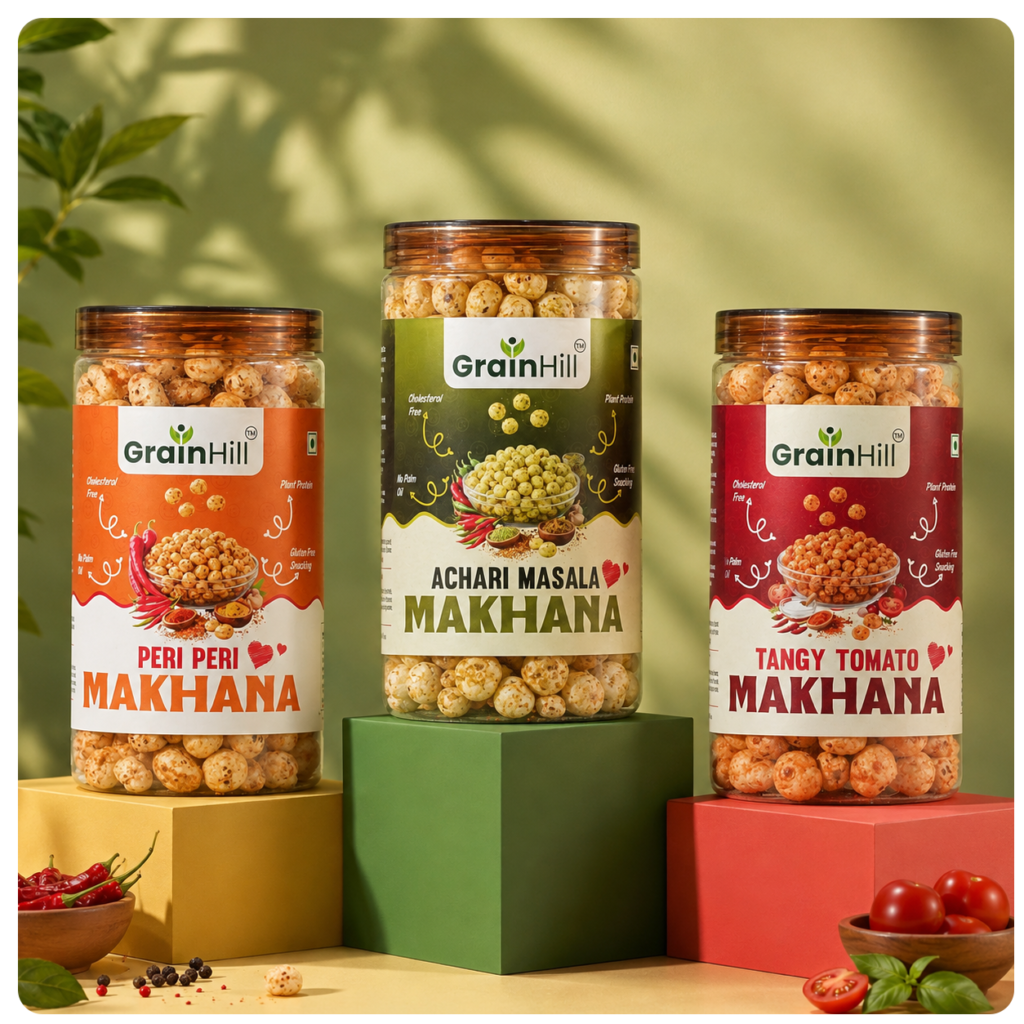
How Grainhill fits in: Grainhill makhana is GI-tagged 6 Sutta makhana from Mithila, Bihar, roasted and seasoned in Tangy Tomato, Achari Masala, Peri Peri and Himalayan Salt flavours.
Frequently asked questions
Is makhana a dry fruit? In everyday use in India, yes. It is sold and eaten like a dry fruit. Botanically, it is the seed of a water lily.
Is makhana a nut? No, it is not a tree nut. If you have a nut allergy, still read the label and ask your doctor.
How many calories are in 50 g of makhana? About 170 to 175 kcal for plain raw makhana. Flavoured, oil-roasted makhana can be higher, so check the nutrition table on the pack.
How many calories are in fox nuts? About 347 kcal per 100 g for plain raw fox nuts, according to commonly cited food composition data. Values vary slightly between sources.
Is makhana good for weight loss? Makhana is low in fat and light, so it can fit into a calorie-controlled diet. Portion size and seasoning matter, and no single food causes weight loss.
What are the main benefits of makhana? It is naturally low in fat, gluten free, light on the stomach and easy to snack on. Plain makhana also has some protein, fibre and minerals.
How much makhana can I eat in a day? A small handful of about 25 to 30 g is a common serving. Your ideal amount depends on your diet and health, so ask your doctor or dietitian if you are unsure.
Which makhana brand is best in India? There is no single answer. Compare size, origin, ingredients, freshness, packaging and price per 100 g, using the checklist above.
Ready to try roasted makhana?
Pick a flavour, check the label against this guide, and see how it compares. Shop Grainhill on grainhill.in or on Amazon India, or ask us about a three-flavour combo on WhatsApp at [WhatsApp number].
This article is for general information only and is not medical advice.